
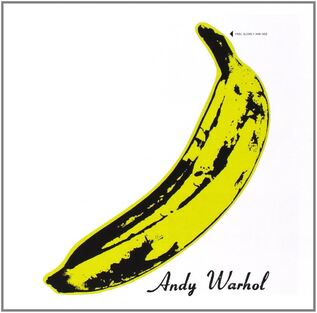
Ah, The Velvet Underground & Nico. The album that made every suburban dad in 1967 spit out his Budweiser and say, “What the hell is this racket? Where’s my Turtles record?” This thing has been called groundbreaking, influential, dangerous — you know, all the words people use when they don’t want to admit they were just scared of Lou Reed. Let’s go track by track, because apparently I hate myself.
Sunday Morning
“Sunday Morning” starts off with these twinkly bells and a lazy bass line that immediately made me think I’d accidentally slipped on The Monkees Greatest Hits instead of this supposedly legendary art-rock thing. It’s got that sunny, candy-coated feel, but then Lou Reed drifts in with a voice that sounds like it’s still stuck under the covers. It’s like they wanted to trick you into thinking this was a cheerful record before blindsiding you with songs about heroin and death. Imagine waking up and being hungover, staring out the window on a misty Sunday morning, and then realizing you’re also trapped in a Macy’s jewelry commercial. That’s the vibe.
As the track progresses, those bells get louder and louder until they’re practically shouting over Lou, like some drunk guy at a wedding reception who won’t stop clinking his glass with a fork. The production is thick too — not lush, not polished, just dense. Like trying to breathe through humid August air in New Jersey while someone spritzes Febreze in your face.. Underneath it all, Lou’s lyrics are hazy, reflective, and just vague enough to let you project your own Sunday regrets onto them.
Then there’s the guitar solo, which sounds like George Harrison played twelve seconds of something “Indian-ish,” and then snuck out before anyone noticed.
So yeah, if you want to experience “Sunday Morning” authentically, here’s what you do: wake up at noon, rip four bong hits, put The Monkees on the hi-fi, and open up YouTube channel that only shows passing trains.
I’m Waiting for the Man
This one smacks you right in the face with pounding 60s drums that could have been ripped straight out of a Beach Boys B-side. Then the guitars chime in — not too flashy, just enough to keep the rhythm pulsing — and before you can get too comfortable, Lou barges in with the immortal line: “I’m waiting for my man.” Oh. So that’s what this album is about.
There’s an energy here that feels almost punk before punk was even a twinkle in Johnny Rotten’s eye. The rhythm doesn’t let up, it just keeps hammering away like a construction crew. The guitars add texture in the background, not soaring leads but gritty layers that make the song feel urgent, like Lou’s really pacing the corner waiting for something big to happen. And let’s be real — we all know what “the man” is slang for, and it ain’t the cable guy.
The production screams mid-60s. Everything’s compressed, tinny, raw. But it works, because the song isn’t trying to be polished. It’s a snapshot of New York grit, long before gentrification turned the corner Lou was standing on into a Starbucks.. It almost feels like a time machine, dropping you in an alley with Lou, twenty-four bucks in your pocket, wondering if this is the day you get mugged or enlightened.
And the crazy part? It’s catchy. Like, way catchier than a song about waiting for drugs should be. I can see why this gets licensed for movies and TV whenever a character’s about to make a bad decision. It’s practically the anthem of bad decisions, and Lou Reed sings it with the confidence of a man who knows he’s already made them all.
Femme Fatale
Now here comes Nico, gliding in like a frozen statue who somehow learned how to sing. The music is laid back — soft drums, slightly out-of-tune guitar — and Nico’s voice floats over it, cool and distant, like someone doing a Petula Clark impression from the bottom of a well. It’s a big tonal shift after “Waiting for the Man,” like they slammed on the brakes and said, “Okay, time for poetry hour.”
The lyrics are about, well, a femme fatale. A dangerous woman. The kind of lady who would seduce you, ruin you, and then still make you drive her to the airport. But the music doesn’t match that vibe at all. Instead of danger, we get a sleepy stroll through the park. It’s mismatched in the way that serving a filet mignon with a side of Cheerios would be mismatched. You appreciate both on their own, but together it just feels off.
There’s also something oddly detached about Nico’s delivery. It’s not emotional, not sultry, just… there. Like a mannequin reciting lines while the band tries to remember what chords they’re supposed to play. And I don’t know if it’s the production or just my brain, but I kept thinking this sounded like The Turtles. Or maybe not. Do The Turtles even sound like this? Probably not. But that’s the level of vague 60s pop this one gives me.
By the end, I’m left thinking less about femme fatales and more about whether Nico secretly hated being here. The track just sort of ends without going anywhere, like a Tinder date where the person says, “Yeah, I think I’m just gonna head out’.
Venus in Furs
Okay, now we’re getting somewhere. “Venus in Furs” doesn’t just open — it oozes in, like a velvet blanket somebody accidentally dropped in a puddle of motor oil. There’s this droning violin, some weird vaguely Middle Eastern percussion, and Lou Reed sounding like he’s narrating a dark fairy tale about a dominatrix who stole his wallet. It’s slow, it’s deliberate, and it’s got that heavy, hypnotic pull where you suddenly realize you’ve been listening for four minutes and forgot to blink.
The song’s secret weapon is repetition. The tempo never really changes, the violin keeps sawing away like it’s trying to open a can of beans, and Lou keeps crooning in that casual, disaffected voice that says, “Yes, I’m describing something very kinky, but I’d rather be watching a Mets game.” It builds a trance, and suddenly you’re not in your living room anymore — you’re crawling across a shag carpet in Andy Warhol’s apartment while someone in a leather mask serves hors d’oeuvres.
Musically, this is one of the album’s big “oh I get it” moments. You can hear why people thought this was revolutionary. I feel like this is what The Beatles were going for but couldn't quite pull it off because of Paul. Not that Paul is a bad guy, or good guy, fuck, I don’t really know him. But lets face it, we all know he’s not really a guy at all because of course he died in a car crash in 1966 and was replaced. But, here’s a little known fact, he was replaced again by Michael Jackson with an android around the time of Say Say Say and The Girl is Mine.
By the time Venus in Furs ends, you don’t feel like you’ve listened to a song so much as you’ve been subjected to a ritual. Honestly, it’s one of the few tracks here where the band’s artsy pretensions actually nail the landing.
Run Run Run
“Run Run Run” barges in like Bob Dylan after a 72-hour bender. It’s got that loose, rambling energy where the band sounds like they all started playing at the same time but didn’t bother to check if they were in the same key. The guitars are all over the place — blues licks, fuzz riffs, feedback squalls — it’s like they invited three different guitarists to solo and just layered them on top of each other. Somehow, the chaos gels into something weirdly compelling.
The lyrics? Lou Reed talking about shady characters doing shady things, but honestly, the words kind of fade into the mess of guitars. This isn’t about storytelling, it’s about creating a sonic bar fight. If “Venus in Furs” was a meditation ritual, “Run Run Run” is the sound of that ritual going off the rails when someone spiked the punch bowl.
What’s really striking is how raw and unfiltered this feels compared to its 60s peers. The Beatles would’ve cleaned this up. The Monkees wouldn’t have been allowed to record this even if they wanted to. Dylan might’ve come close, but he’d have wrapped it in harmonica and called it poetry. The Velvet Underground, though? They just went, “What if we don’t clean anything up and just see what happens?” And what happens is… actually kind of great.
You can even hear echoes of later bands in here. Zappa’s satirical freak-outs, punk’s stripped-down drive, even bits of garage rock sloppiness that would inspire a thousand bands who never learned how to tune. It’s messy, it’s relentless, and it makes you realize why this album scared record executives.
All Tomorrow’s Parties
If you thought “Run Run Run” was chaotic, wait until Nico takes the mic again for “All Tomorrow’s Parties.” The song is basically a piano getting beaten to death in an empty church. It just pounds, endlessly, like a metronome that’s developed a taste for blood. On top of that, there’s reverb slathered over everything — drums, vocals, guitar — as if Phil Spector wandered in, did a bump of speed, and said, “Yeah, just drown it all.”
Nico’s vocals hover over the mess, detached and ghostly. It’s haunting in theory, but in practice, you’re kind of just waiting to see which will give out first: the piano player’s hands or your patience. That said, it is hypnotic. The mechanical rhythm lulls you into a trance, like one of those old Casio keyboards where you hold a single key and it keeps spitting out the same loop until you beg for mercy.
Then out of nowhere, we get an out-of-tune, out-of-time guitar solo that sounds like someone dropped a guitar down an elevator shaft and just recorded the clangs. And it works. It adds to the sense that this whole track is about to collapse, but somehow it keeps plodding along for six full minutes. You start off rolling your eyes, but by the end, you’re like, “Yeah, I think I’ve been brainwashed. Let’s go buy a beret.”
If “Sunday Morning” was the bait, “All Tomorrow’s Parties” is the switch. This is where casual listeners would have gone, “Nope, I’m out,” and tossed the record aside. But for the weirdos — the future punks, the kids who thought The Byrds were too wholesome — this was the golden ticket. A dirge dressed up as pop, delivered with the conviction of a band that didn’t care if you hated it. And in that sense, it’s kind of brilliant.
Heroin
Here it is. The song that put The Velvet Underground on the map.. “Heroin” starts with a simple two-chord drone, Lou Reed mumbling in his best “I just woke up on the floor of a bus station” voice. A tom-tom thumps in the background, steady at first, like a heartbeat. It’s so stripped down that at first you wonder, “This? This is the legendary song?” But then it starts building. And building. And then falling apart. And then building again. It’s like the musical equivalent of trying to stand up too fast after chugging cough syrup.
What makes it fascinating is the way it plays with tempo. Sometimes the drummer speeds up, like he’s racing toward a panic attack. Sometimes he slows down, as if he’s nodding off mid-song. It’s intentionally sloppy, intentionally unpredictable, and it mirrors exactly what the lyrics are describing: the rush, the crash, the cycle of the drug. Lou sounds half-bored, half-possessed, like he’s dictating his grocery list but his groceries are “sailor suit, captain’s hat, needles.” That’s the genius — he’s not glorifying heroin, but he’s not condemning it either. He’s just describing it. And in 1967, that was basically a Molotov cocktail lobbed into the music industry.
The climax is pure chaos. Guitars scratch and wail, the drums go berserk, it sounds like a stampede of elephants charging through a tin-roofed warehouse. Then it crashes, gasping, like the band itself just overdosed and needs a nap. It’s uncomfortable, it’s dirty, and it’s absolutely effective. For better or worse, this is the track that makes you understand why people say this album “changed everything.”
But also — Lou wishing he could be a sailor? Really? If I get a magic wish, I’m going with “world peace,” “infinite pizza,” or at least “free cable.” Lou asks for a hat and a boat. Maybe that’s the heroin talking. Or maybe Lou Reed was just the kind of guy who thought navy cosplay was a higher calling. Either way, “Heroin” is a landmark track, and one of the few times the band’s chaos feels perfectly matched to its subject matter.
There She Goes Again
After the existential freefall of “Heroin,” the album snaps back with “There She Goes Again,” a bouncy little pop number that sounds like it escaped from American Bandstand. The guitars are bright, the beat is steady, and the backing vocals chirp “There she goes” like a Greek chorus of babies with harps. It’s downright catchy — annoyingly so. This is one of those songs that gets stuck in your head against your will, like a jingle for herpes medication.
Musically, it’s the band at their most conventional. You can actually imagine Dick Clark introducing this one, before realizing halfway through that Lou Reed’s probably singing about a prostitute. That was the Velvets’ whole shtick — take a familiar 60s pop framework and lace it with enough sleaze to make people nervous. It’s subversive in the sneakiest way possible.
The structure is classic 60s: verse, chorus, verse, and then a double-time ending that kicks everything into overdrive. Suddenly the band’s doing a faux sha-na-na bit, like they’re both mocking and embracing doo-wop at the same time. It’s playful, it’s tongue-in-cheek, and it shows that underneath all the noise and drones, they actually could write a straight-up pop song if they felt like it.
But let’s not overthink it. “There She Goes Again” is fun. Simple as that. And it’s a weird kind of relief after six minutes of Nico chanting about endless parties and Lou describing his drug binges. Not the best track on the album, but easily the most hummable.
I’ll Be Your Mirror
And then… Nico’s back. “I’ll Be Your Mirror” drifts in like a lullaby sung by an android trying to pass the Turing test. It’s soft, minimal, with gentle strums and Nico’s icy voice front and center. She’s singing about empathy, about reflecting someone’s beauty back at them — which is sweet, in theory. But the delivery is so flat and detached that it feels less like comfort and more like a voicemail from the extended car warranty guy.
The band keeps things stripped down here: no pounding piano, no violin scraping, just a quiet little ballad. And honestly? It drags. Nico’s accent adds a kind of unintentional comedy, like she’s trying to sell you on a time-share in Düsseldorf while reading Lou’s lyrics off a cue card. It’s well-intentioned, but it doesn’t land. You don’t feel soothed, you feel like you’re being put under hypnosis against your will.
What really kills it is the pacing. The song just sort of sits there. No build, no shift, no energy. After “There She Goes Again,” it’s like somebody yanked the aux cord and replaced it with a dial tone. By the last verse, you’re begging for Lou to cut back in and mumble something sarcastic, just to break the monotony.
It’s a shame, too, because the song’s message is genuinely kind — maybe the most tender thing on the album. But in practice. It’s cold, stiff, and vaguely unsettling. I feel like the band should have taken her up on the offer. She would be their mirror, and by the tempo of the song they definitely needed somewhere to do some coke.
The Black Angel’s Death Song
By the time we get to “The Black Angel’s Death Song,” it feels like the band has stopped pretending they’re making music for human consumption and started making music for, like, a haunted string quartet that accidentally wandered into the wrong basement. The track kicks off with sharp, plucky strings that scrape at your ears like a cat trying to claw its way out of a metal trash can. Over this racket, Lou Reed steps up to the mic and decides, “Yeah, I’m gonna do my Bob Dylan impression.
It’s chaotic, but not in the high-energy way of “Run Run Run.” This is more like chaos with a sneer. The strings bend and wobble, the rhythm is basically nonexistent, and Lou’s words spill out like stream-of-consciousness nonsense poetry. Half the time you’re thinking, “Okay, maybe I get it,” and the other half you’re wondering, and wondering, and wondering. The Velvets weren’t trying to entertain you here — they were trying to see how far they could push before the needle skipped off the record.
And you know what? It kind of works. It’s unsettling, alien, and memorable in that “I don’t want to hear it again, but I’ll never forget it” way. Like getting food poisoning at a fancy restaurant: technically awful, but also an experience you’ll tell stories about for years. It’s Dylan if Dylan traded his harmonica for a rusty violin and decided to take mushrooms in downtown Detroit.
By the end, Lou is practically speaking in tongues while the instruments collapse into a messy drone. It doesn’t so much finish as it just gives up. You can almost picture the band looking around the studio and saying, “Yeah, good enough,” before heading out for cigarettes. It’s not pretty, but it’s very Velvet Underground — art over accessibility, atmosphere over melody, and a general sense of “screw you”.
European Son
The album closes with “European Son,” which starts out almost cheerful, like a 60s house-party jam. The bass is bops, the guitar has a sunny surf-rock shimmer.. But then Lou Reed starts half-speaking, half-rapping over the top, and you realize, nope — this is going off the rails fast.
And oh, does it go off the rails. Within a minute, the song explodes into nearly eight minutes of pure chaos: feedback shrieks, guitars clang, drums pound with no discernible rhythm, and the whole thing becomes an exercise in endurance. It’s not a song so much as an art installation of noise, like someone set up microphones in a airport hanger during a hailstorm. If you made it through the first nine tracks thinking, “This is weird but still music,” “European Son” is here to say, “No, buddy, THIS is art.”
On one level, it’s frustrating. You sit there thinking, “Why am I listening to Lou Reed scream into a refrigerator for eight minutes?” On another level, it’s kind of brilliant. The whole album has been about breaking pop music apart, track by track, and “European Son” is the final sledgehammer swing. They start with a familiar groove, then obliterate it, leaving only feedback and rubble behind. It’s like the musical equivalent of burning the house down after moving out.
Does it overstay its welcome? Fuck yes! Could the album have ended just as powerfully without it? Another resounding Fuck Yes!. But it’s also the ultimate statement of intent: The Velvet Underground didn’t care about your patience, your expectations, or your ears. They cared about making something raw and uncompromising. And in that sense, “European Son” is the perfect finale, even if it is a little annoying while you’re slogging through it.
Wrap-Up
So, what do we make of The Velvet Underground & Nico? It’s an album that takes everything shiny and innocent about 1960s pop music — jangly guitars, bouncy beats, harmonies you could whistle in the shower — and drags it through a syringe. It’s uneven, it’s weird, and at times it’s downright unpleasant. But it’s also undeniably bold, groundbreaking, and unlike anything else from its era.
Tracks like “Sunday Morning” and “There She Goes Again” get to first base with mainstream pop, while “Heroin,” “Venus in Furs,” and “All Tomorrow’s Parties” dive headfirst into, well never mind. Nico’s icy vocals give the record a detached, ghostly aura, though sometimes you wish Lou had just vocally handled everything himself. And the noise experiments — “Black Angel’s Death Song” and “European Son” — show a band actively daring you to hate them, almost gleefully dismantling the idea of what rock music should be.
Listening to this album in 1967 must have been like stepping off a curb and getting hit by a truck. It wasn’t built to comfort you, it was built to shock you, to unsettle you, to make you see pop music through a cracked, dirty lens. And while I can’t say I’m itching to spin it again tomorrow, I get it. I get why critics and musicians worship it. It’s less a collection of songs and more a manifesto: this is music for outsiders, for weirdos, for people who wanted to burn down the Beatles’ mop-top cheeriness and replace it with something darker, stranger, and a little more honest.
Do I love it? No. Do I respect it? Absolutely. This isn’t an album you play at a party unless you want everyone to leave. But it’s an album you experience at least once, if only to say you did. And once you do, you’ll never look at pop music the same way again — you’ll look at it through a dirty warehouse window, with Lou Reed smirking at you, Nico glaring icily from the corner, and John Cale sawing away on a violin that hasn’t been tuned since the Eisenhower administration.