
Podcast
Animated Review
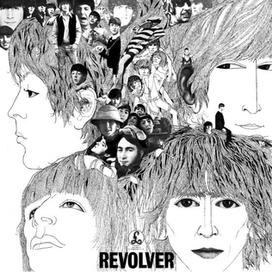
By 1966, The Beatles were done with mop-top cuteness. No more “I Want to Hold Your Hand” innocence — this was “I Want to Stare at my hands While My Sitar Hums at You for Six Minutes.” Revolver is the transitional album: half catchy pop genius, half psychedelic weirdness.
The themes? Taxes. Death. Acid sunshine. Fake birds. Submarines. Doctors giving you drugs. And of course, love songs that make you wonder if you’re really in love or just really high. Basically, it’s Rubber Soul after a few bong hits, on the road to Sgt. Pepper with the windows rolled down and a bag of questionable substances in the glove box.
I don’t know who started this trend, or why, but the album kicks off with George Harrison, counting us in 1-2-3-4 like we’re so dumb we’d forget music has beats. There are shuffling noises in the background, too, because apparently we needed more realism — as if this studio business intro is going to suddenly make me completely forget that I’m sitting in my car, waiting to go to court while I’m listening to this. And then what? I snap out of it, like OH Shit! I thought I was in a studio with the Beatles there for a minute.
Just kidding, I’m not going to court. Or am I? Maybe I am! With intros like the 1-2-3-4 countoff for this song, I feel like the Beatles think I’m that forgetful.
Which is exactly why I’m going to court! Or am I?
But what about the song? A chugging groove, all sharp guitars, tight drums, and someone shaking a sack of coins like they’re busking outside Abbey Road. It’s alive, it’s biting, and it’s pissed. Harrison basically wrote the soundtrack for every adult who opened their first paycheck and screamed, “What the hell happened to my money?”
Lyrically, it’s simple: the government’s taking too much cash, and George isn’t thrilled about it. Not exactly Shakespeare, but the groove makes up for it. The sarcasm drips just enough that you can almost hear George sneering behind the mic.
As an opener, it’s brilliant. Taxes, money-grabbing politicians, and a band fed up with the system — timeless stuff. If only H&R Block used this as their hold music, I’d complain a lot less during tax season.
The strings, and the lovely people, picking up rice, wearing the face that she keeps in a jar by the door. Wait what? I’ve always thought that was macabre as fuck. I was much older than I’d like to admit when I realized he was likely talking about makeup, or the persona you wear in public, or probably just something completely metaphorical and way over my head, but definitely not someone's removed face. Definitely not, right?
This is dark, heavy stuff. Eleanor is the embodiment of loneliness, Father McKenzie writes sermons no one will hear, and eventually, she dies, and he buries her. Fun! The first song was about taxes, now we’re at death and isolation. Thanks, Beatles. Really keeping things light for us.
But it works. The lyrics are vivid, the imagery haunting, and the string arrangement is beautiful and menacing at the same time. It’s like a gothic short story set to chamber music: no drums, no guitars, no cute harmonies — just stark, brutal realism.
“Eleanor Rigby” is where the Beatles said: yeah, we’re pop stars, but we can also crush your soul in under three minutes. And we’re just getting started.
This one wastes no time — jangly guitar, dreamy vocals, straight into the vibe. No count-in, no rice funerals, no fake noise. Just the Beatles lying in bed and telling you about it. Relatable kings.
The whole track feels loose and hazy, like they set up in your living room while you’re half-asleep on the couch. The guitars swirl, the bassline pops in at just the right moments, and the arrangement drifts like a lazy afternoon. It’s casual but hypnotic, the audio equivalent of hitting snooze ten times in a row.
And then — the backwards guitar solo. Trippy as hell, especially in 1966 when people’s minds were already marinated in Kool-Aid and blotter acid. It’s the Beatles announcing: yes, we can play songs backwards now, and yes, your hippie brain will explode.
What really seals it is the breakdown — “taking my time” — where the groove shifts into this wonderful little bass-and-drum pocket. It’s clever, it’s weird, it’s funny, and it’s pure Revolver. You’re awake, you’re asleep, you’re confused, you’re hungry. Just go with it.
George Harrison returns with the sitar, and immediately, you know this is aimed at the acid heads in the audience. All those guys in paisley shirts saying, “This is DEEP, man.” Honestly, the sitar here is a little hokey, like a cop show trying too hard to sound “exotic” — Dragnet Goes to Delhi.
But when the drums kick in and the melody actually settles, it clicks. Suddenly, it’s less TV cliché and more legitimate attempt at East-meets-West psychedelic fusion. And the lyrics? Straight to the point: time is short, so let’s spend it making love all day. Not exactly subtle, but hey, at least it’s honest.
This is Harrison leaning hard into his “world music mystic” phase. The song is less about melody and more about atmosphere, a preview of how far out he’d go later with Within You Without You. At this stage, though, it’s still balanced enough to work.
Placed between the dream haze of “I’m Only Sleeping” and the pop perfection that follows, it’s a bold left turn. Weird, imperfect, but essential to the Revolver tapestry.
Okay, confession time: I’ve never loved this song. I’ve always thought it was because it’s Paul at his sappiest, his most gooey-eyed, his “I just wrote this while staring at a flower” mode. It floats, it drifts, it makes you want to roll your eyes.
But on closer inspection, I realize my real beef is those harmonies. They’re pure Beach Boys — layered, syrupy, cloying. And I hate the Beach Boys. They are at the absolute bottom of the bands I like list, below even Limp Bizkit, because at least Limp Bizkit never made me sit through Kokomo. These harmonies bother me on a primal level.
That said, credit where it’s due: it’s beautifully arranged. The chord changes are sneaky and elegant, and the vocal performance is flawless. I can respect the craftsmanship even if the vibe makes me want to gag. It’s like looking at a perfectly made fruitcake — impressive, but no thanks.
So yeah, people call this one of McCartney’s greatest ballads. Me? I call it the “do laundry and skip track” moment. Sorry, Paul.
It's a song on this album. Mr. Starky got some royalties.
Now we’re talking. Crunchy riff, pounding drums, Lennon sounding like he just chugged cough syrup and declared he knows what it’s like to be dead. Heavy stuff. It’s riff rock, proto-Zeppelin in its weight, but filtered through Lennon’s weird, surreal lens.
The lyrics are trippy in that very specific 1966 way: half philosophical, half nonsense. “I know what it's like to be dead, Because You’re making me feel like I’ve never been born.” To teenage hippies on acid, this was a revelation. To sober adults in 2026, it’s still kind of badass.
Musically, it’s tight — Ringo absolutely kills it here, the guitars bite hard, and the arrangement keeps shifting just enough to stay unpredictable. It’s one of those tracks that doesn’t get the radio love of “Eleanor Rigby” or “Tomorrow Never Knows,” but it’s a gem.
This is Revolver flexing its rock muscles. Weird lyrics, killer riffs, mind-bending delivery. Exactly the kind of thing that made people in 1966 say, “Pass the Kool-Aid.”
A clear precursor to the Sgt Pepper era, a little bit of Good Morning, Good Morning mixed with When I’m 64. It seems to be about a guy having a great day because he's in love. Is it a good day, or is he delusional because of this intense love he’s feeling? However, with the themes of this album being so dark, I’m not even sure he’s really in love. OHHHHH, it's sunshine LSD! The sunshine is made of ACCCCIIIIDDDD! Did you hear my Charlton Heston coming through? Should I delete that? Nobody is going to get that. Oh shit, these songs are short.
This one rips out of the gate with a dual guitar riff so long and winding it might as well come with a rest stop halfway through. Seriously, the intro alone could qualify as its own song. It’s flashy, it’s tight, and it screams, “We’re the best band in the world and we know it.”
The lyrics, though? Classic Lennon snark. He’s mocking someone who thinks they’ve got it all — possessions, fame, fancy toys, maybe even an actual bird. But underneath it all, they’re still hollow. It’s not subtle, but it’s sharp. You can practically see Lennon sneering while he sings it.
Musically, this might be the tightest the Beatles sound on Revolver. The rhythm section is locked, the guitars are bright and precise, and the vocal delivery cuts right through. It’s riff rock disguised as pop — the kind of thing that would inspire a million lesser bands to say, “Let’s do THAT!” and then fail miserably.
And that closing guitar riff? It just keeps going and going, like they didn’t know how to end it, so they said, “Eh, just play it until the tape runs out.” It’s excessive, it’s glorious, and it makes the song unforgettable.
The opening piano figure makes you think for a split second you’re about to hear “Eleanor Rigby” reprise, but nope — this one’s even bleaker. A quiet, delicate ballad about the death of a relationship, delivered with such cold detachment it feels like McCartney wrote it on a legal pad during a divorce hearing.
Musically, it’s stunning. The clavichord (yes, clavichord) gives it this oddly baroque, cinematic feel, like it could soundtrack a black-and-white French film about ennui. Then there’s the French horn solo, which sneaks in beautifully, aching and melancholic. It’s tasteful in a way only the Beatles could pull off.
The lyrics? Brutal. There’s no “we can work it out” optimism here. It’s over, it’s done, and Paul sings it like he’s already emotionally checked out. “She says that living with you is bringing her down.” Yikes. That’s not a breakup line — that’s a surgical strike.
“For No One” is short, understated, and devastating. It’s one of those songs that sneaks up on you — no big flourishes, no studio tricks, just quiet heartbreak. And somehow, that makes it hit harder than any psychedelic experiment on the record.
The Beatles get heavy here, with just the right production; this could be an Aerosmith song. Oh no, now I’m imagining Steven Tyler screaming through this song. Yak ak ak ak ak Dr Robert! Now there’s a cursed thought: Aerosmith’s Revolver. The song is right in line with Aerosmith, too, as it's basically about the cool neighborhood doctor who hands out uppers like Tic Tacs. Imagine a man in a white coat with a stethoscope in one pocket and a handful of Dexedrine in the other. Need a pick-me-up? Dr. Robert’s got you covered. Need a crash course in recreational pharmaceuticals? Step into his office, kids.
The song itself has a steady, almost plodding groove — the guitars are sharp but not flashy, the drums keep a straight beat, and the harmonies are crisp. Nothing revolutionary musically, but it’s the subject matter that makes it fun. Lennon sings it with this sly grin, like he knows you know he knows what he’s singing about.
It’s not the most memorable track on the album, but it’s a snapshot of the Beatles leaning into their darker, druggier edges — and having fun with it. A filler track, maybe, but a filler track with a prescription pad.
This Harrison tune opens with a riff that feels jagged, unresolved, and almost uncomfortable. And that’s the point. The whole song is about not being able to express what you want to say, and the music mirrors the frustration — those clanging piano chords drone in like a migraine, and the guitar lines hover just a little off-balance.
Ringo is pounding away in the back with his usual steady brilliance, and the maracas add this strange, almost sinister texture. Normally, maracas scream “party!” but here they sound like someone shaking sand in your ear. The whole track feels tense, like it’s holding something back.
Then come the shifts — little changes in rhythm and tone that keep you off guard. Just when you think the song will settle, it lurches in another direction. It’s executed so cleanly it almost feels like prog rock in miniature. Harrison wasn’t just writing filler here; he was pushing the Beatles into trickier, moodier territory.
And those claps at the end? Somehow, they don’t sound celebratory. They sound unsettling, like people clapping at the wrong time during a funeral. It’s small details like that that make “I Want To Tell You” so eerie and effective.
Paul’s back, and he brought the horns. Big, brassy, soulful horns that blast out like the Beatles just hired Sly and the Family Stone to guest on the track. It’s loud, it’s punchy, it’s bursting with energy, and it might just be the tightest arrangement on the whole album.
The lyrics are straightforward: a love song, plain and simple. But Paul sells it with absolute conviction. When he belts “Got to get you into my life!” at full volume, it’s not cheesy — it’s thrilling. He sounds like a man possessed, and the horn section is right there with him, egging him on.
Musically, this is McCartney showing he can do Motown-inspired soul just as well as the pop ballads. The rhythm section is locked in, the horns are perfectly placed, and the vocals sit right on top like a cherry on a sundae. You can hear the Beatles growing tighter, sharper, and more adventurous with every bar.
And that ending — Paul screaming over the horns as the song fades out — is pure magic. It’s the sound of a band at peak confidence, throwing everything at the wall and sticking the landing. One of the best songs on Revolver, no question.
This is it — the Beatles closing out Revolver by basically declaring, “We’re not just a rock band anymore, we’re a cult, and here’s your initiation tape.” From the first drone of that tambura and the backward tape loops swirling in, you know you’re in for something completely different. Forget catchy pop melodies — this is a sound experiment disguised as a song.
The drums are relentless, pounding like some mechanical ritual, while Lennon’s vocals float above the mix, filtered and distant, like the voice of God if God had just discovered LSD. He’s not singing so much as chanting — “Turn off your mind, relax, and float downstream.” And people in 1966 actually DID. They turned off their minds, relaxed, and stared at their lava lamps for the next six hours.
It’s easy to draw the line from here to the White Album’s “Revolution 9.” Except the difference is: this works. “Tomorrow Never Knows” feels purposeful, hypnotic, mesmerizing. “Revolution 9” feels like someone left the radio and the blender on at the same time. This is the good version of Beatles avant-garde.
As a closer, it’s perfect. It doesn’t just end the album, it launches the Beatles into the psychedelic stratosphere. You can practically see the doorway from Revolver to Sgt. Pepper opening right here. Was it great? Not exactly. Was it essential? Absolutely. This was the Beatles saying goodbye to mop-top pop forever, and hello to incense, headbands, sitars, and “those people” who were very, very into all of that.
And that’s Revolver. An album that starts with taxes, drifts through loneliness, death, love, sitars, sunshine-acid, drug-dealing doctors, failed relationships, and ends by telling you to shut your brain off and float into the cosmic abyss. Casual stuff!
It’s messy, it’s brilliant, it’s experimental, it’s uneven — and that’s why it’s legendary. The Beatles weren’t just writing hits anymore; they were reinventing what pop music could be, one sitar drone and backward tape loop at a time.