
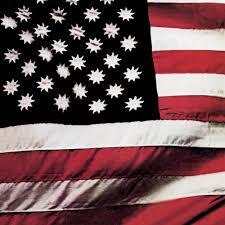
If you only know Sly from the hits—“Dance to the Music,” “Everyday People,” “I Want to Take You Higher”—then Riot will hit you like a bucket of bong water to the face. The sunshine is gone. The tie-dye is faded. The cocaine is plentiful. This isn’t the sound of a band throwing a party; it’s the sound of one man locking the doors, unplugging the phones, and overdubbing himself into a drug-soaked cocoon of paranoia.
Everything about this album is wrong in the best way. The drums sound like cardboard boxes mixed with metronomes. The vocals are buried under tape hiss so thick you want to clean your speakers. The horns pop in and out like they’re being played from the apartment next door. And yet—somehow—it’s one of the greatest albums of all time. Funk has never been so warped, so paranoid, so claustrophobic, and so damn fascinating.
This isn’t a record you put on to get pumped up before a night out. This is a record you put on when the night is already over, the lights are too bright, and you can hear your own heart beating in the silence. And now, side one.
Luv & Haight
Wah pedal, wah pedal, and—guess what?—more wah pedal. If you thought Hendrix had cornered the market on wah abuse, nope, Sly bought the whole damn factory and hired five stoned interns to sit there stomping on pedals until the end of time. Underneath, the bass rumbles like a distant thunderstorm and the background singers swoop in with ghostly “ahhs.” This ain’t no “Dance to the Music” party. This is “I’m staying on the couch because gravity feels extra heavy today.”
Then the refrain hits: “Feel so good, don’t wanna move.” Relatable. That’s the sound of a man with five joints, a six-pack of Schlitz, and absolutely zero desire to get off the carpet. The horns try to elevate things with some “take me Higher” swells, but the wah just chases its own tail in circles, making you dizzy like watching your cat chase the red laser pointer for six hours straight.
And holy hell, if Sly really is on drums here, then he’s not just keeping time—he’s bending it into pretzels. The beats wobble between a funk shuffle and a Mitch Mitchell acid-jazz meltdown. Sometimes it’s loose, sometimes it’s tight, sometimes you wonder if the tape is melting. It’s woozy, swampy, and messy, but it’s the kind of mess you want to sink into. Like quicksand. Funky quicksand.
Just Like A Baby
This one’s slinky, sweet, and, let’s be honest, slightly creepy. The layered keyboards are smooth enough to butter your pancakes, and Sly croons like he’s lying flat on his back in the studio—which, if the story’s true, he literally was. It’s less “vocal take” and more “man refuses to sit upright while confessing his feelings.”
He sings: “I cry sometimes, just like a baby.” And you believe him. He probably cried, recorded it, overdubbed himself crying in harmony, and then cried some more because the cry mix wasn’t EQ’d right. The bass pulses along, steady and low, like it’s sneaking around the apartment so it doesn’t wake the neighbors. I’d bet a fried chicken dinner Larry Graham actually played this one.
Then the bridge—if you can call it that—drops in: one Sly moaning like a lovesick ghost drifting through outer space, another Sly growling like the demon haunting his bloodstream after two weeks of nonstop coke. Both fight for attention in your speakers, fading in and out of the mix. It’s like good Sly vs. evil Sly, except both of them are pretty messed up and neither is winning. Add the glorious hiss of the tape, the sloppy punch-ins, and the unpolished grit, and you basically feel like you’re high right along with him. This isn’t “baby-making music.” It’s “you woke up at 3am, the TV’s snowing, and you’re too paranoid to turn on the lights” music.
Poet
Finally! Actual live drums—for about three seconds. Then the rhythm king drum machine stomps in, trying to out-groove the humans, while a funky clavinet wiggles around like it just snuck out of a Stevie Wonder session. Sly declares his only weapon is his pen, which is ironic because at this point his real weapon was clearly “lock myself in the studio and terrify my bandmates until they quit.”
The bass line wanders around like it’s drunk, the guitar sneaks in with chicken-scratch licks, and suddenly your head’s bobbing before you even know it. Is that Bobby Womack? Ike Turner? Billy Preston? Miles Davis wandering in after mistaking the studio for a liquor store? Nobody knows. Honestly, half the Family Stone probably didn’t even show up. This record is more of a Sly solo project with random cameos than a group effort.
But those keyboards. My God, the keyboards. They bounce left to right across your skull, darting in and out like a mischievous kid playing hide-and-seek. The drum machine keeps a rigid pulse while the live drums slink underneath, like two kids trying to push each other off a seesaw. The result: funky chaos that somehow works, like duct taping a jazz band to a metronome.
Family Affair
And now—the hit. The giant. The last time Sly & Co. topped the U.S. charts. “Family Affair” sounds like no other Family Stone track, which might be why it worked. Instead of horns, live funk, and good vibes, you get: a drum machine clicking like an old typewriter, an electric piano playing the simplest chords imaginable, and Sly muttering like he’s giving you confidential life advice over a payphone. Rosie floats in with her airy, far-off vocals, like she recorded her part from the apartment next door.
It shouldn’t work. But oh man, it does. There’s this small, sweet guitar/keyboard exchange before the second verse that lasts about four seconds, and it’s like finding a flower growing in a crack on the sidewalk. Then Sly comes back in, voice strained and heavy, sounding both completely exhausted and completely committed.
The closer? That scream. That half-restrained, half-feral scream. It’s primal, like he just stubbed his toe on the truth. It rattles the song to its bones. The whole track is deceptively minimal, but it’s one of those rare cases where “less is more” isn’t just a cop-out—it’s genius.
Africa Talks To You (“Asphalt Jungle”)
Okay, this one is long. How long? Long enough that your beer gets warm before it’s over. Long enough that you check your turntable to make sure it’s not stuck. Long enough to make you wonder if maybe Sly forgot to stop recording and just left the machine running while he went to the bathroom.
It starts with drum machine blips and warm bass thumps before real hi-hats and snare creep in. Then wah. More wah. Infinite wah. Vocals come in layered like a gospel choir on acid: falsetto Sly, guttural Sly, background men and women chanting, and everyone screaming “Timberrrrrrrr” like a lumberjack convention in hell.
Here’s the thing: it’s repetitive, it’s indulgent, and it’s absolutely necessary. Cutting this track would be like cutting “The End” off The Doors or the last six minutes of “Hey Jude.” You don’t trim the madness; the madness IS the point. Each time you think it’s too much, another weird layer enters—wah’d-out guitar lines, moaning, scatting, muttering—and suddenly you’re lost in the asphalt jungle yourself.
This is the track that proves Riot isn’t just an album—it’s a trip. Not a fun trip. Not a “grab your tie-dye” trip. More like a “you took the wrong pill and now you’re staring at the wallpaper for six hours” trip. And yet… you can’t look away.
There’s A Riot Goin’ On
Ha! Fooled you. It’s silence. A few seconds of glorious nothing. Joke? Statement? Broken tape? Nobody knows. It’s Sly basically shrugging and saying, “You wanted a title track? Here you go. crickets chirping.” Genius or trolling? Yes.
Brave & Strong
Side Two kicks off, and… okay, I’ll be honest, it’s not exactly a fireworks show. The bass comes in thick and thumpy, the drum machine ticks away like it’s fighting for its life, and live drums show up to slap on some humanity. Then—horns! But not the glorious, punch-you-in-the-gut Family Stone horns of yesteryear. These are awkward little stabs that feel like they wandered in from a B-side James Brown rehearsal and decided to stay for lunch.
It’s got energy, but not the right kind. The groove wants to be uplifting, but the mix and arrangement kind of sag under their own weight. Instead of soaring, the horns just poke at you, like an annoying little sibling tapping your shoulder. Compared to the paranoid genius elsewhere on the album, this one just… plods.
That said, it’s not a disaster. The rhythm section is still funky, Sly’s delivery has bite, and the song has enough muscle to get your head nodding. It’s just the one time on Riot where you think: “Huh. That was fine, I guess.” If Riot is a drug trip, this is the part where you’re just staring at the carpet, waiting for something interesting to happen.
You Caught Me Smilin’
Now we’re back in business. This one slinks in on some breezy guitar and keyboard interplay that feels like the band is finally cracking a smile after all the gloom. The chorus is so smooth and mellow you almost expect it to dissolve into a Seals & Crofts song. But don’t get too comfortable—this is Sly, and you know he’s gonna yank the rug out sooner or later.
Sure enough, the bridge hits and suddenly you’re in nasty funk territory. Wah pedals screech, bass licks twist your face into the “stank funk” grimace, and Sly lets loose with the kind of screams that make you check your windows to see if the neighbors are worried. It’s like falling asleep on a hammock and waking up in the middle of a mosh pit.
The beauty of the track is in the whiplash. One minute you’re floating on pillows of harmony, the next you’re slammed into sweaty, sticky funk. Then back again. Then back AGAIN. It’s chaotic, but it works—like a funhouse mirror version of classic Sly singles. By the end, you’re not sure whether to pour yourself a drink or take a nap. Maybe both.
Time
“Time” slows everything down to a crawl, and for good reason. The drum machine ticks like a pocket watch, quiet and steady in the background, while the bluesy groove drags forward like it’s carrying a boulder uphill. Sly’s vocals are shoved right up in your face—urgent, raw, practically spitting in your ear. It’s one of the few times on the album where you feel like he’s actually begging you to listen, not just messing with overdubs for his own amusement.
Lyrically, it’s Sly staring straight into the void. He’s obsessed with time, how it passes, how it traps you, how it won’t stop no matter what. His delivery is jagged, almost out of time with the beat itself, as if he’s fighting against the flow. Every growl, every strained syllable, feels like he’s trying to claw his way out of reality.
Then there’s the fade. It doesn’t end so much as it evaporates. You’re left hanging, unsettled, like someone cut the power mid-sentence. It’s haunting, because for a few minutes you’ve been dragged into Sly’s headspace—and it’s not a place you want to stay for long. But you can’t look away either.
Spaced Cowboy
This one is pure weirdness, and I mean that in the best way. It starts innocently enough: deep bass groove, drums pushing it along, keyboards swirling into familiar Riot haze. You think, “Okay, more funky paranoia, I’m ready.” And then—out of nowhere—the yodel. The spaced-out, intergalactic yodeling that either makes you laugh out loud or clap your hands in awe. Or both.
The yodel keeps coming back like a stubborn echo, weaving in with Sly’s whispers and mutters. It’s absurd, but in context it totally fits—this whole album is Sly breaking apart at the seams, so why wouldn’t he decide to drop a cowboy yodel in the middle of an otherwise straight funk jam? It’s like a prank call from space.
Then comes the harmonica, which somehow ties it back to classic Sly & the Family Stone territory. It’s soulful, playful, and just when you think the song might spin out completely, it reins you back in. Until the yodel returns, of course, and then you’re off the rails again. Love it or hate it, “Spaced Cowboy” is the sound of a genius refusing to give a damn what you think. And honestly? That makes it brilliant.
Runnin’ Away
Finally—a breather. Cynthia Robinson’s French horn takes the spotlight here, and it’s a refreshing change of pace. The line has a TV theme-song vibe, playful and bright, almost like something you’d hear before a sitcom. Rosie’s vocals glide in smoothly, giving it a lighter, breezier feel than most of the album. It’s like the clouds part for three minutes and the sun sneaks through.
The bridge is especially gorgeous: layered horn harmonies and call-and-response vocals weaving together in a way that feels joyful, even triumphant. Then the full-on horn solo arrives, and it’s funky, full, and unapologetically brassy. If the rest of Riot feels like stumbling through a druggy haze, this track is the part where you remember life can actually be fun sometimes.
That said, it’s still got the grit of the album—the bass and drums are live, heavy, and locked tight. You can almost picture Larry Graham’s thumb bleeding on the strings. It’s one of the few moments on Riot where Sly lets the funk feel alive again, instead of buried in paranoia. And it’s beautiful for it.
Thank You For Talkin’ To Me Africa
The closer. The monster. The evil doppelgänger of “Thank You (Falettinme Be Mice Elf Again).” Everything familiar about the original hit has been slowed, warped, and dragged through a swamp of tape hiss. The bass doesn’t just play—it stomps, relentless and crushing. The guitars flicker in and out like ghosts. And the vocals are stacked layer upon layer until it sounds less like singing and more like a seance.
The repetition is the point. The chorus drones in and out, Sly screams from the abyss, the drums keep trudging forward like a giant with cement shoes. It’s hypnotic, suffocating, and weirdly comforting—like falling asleep under a heavy blanket you’re not sure you can crawl out from.
Then comes the kicker. After nearly ten minutes of this slow-motion funk apocalypse, Sly delivers the line: “Dyin’ young is hard to take / Sellin’ out is harder.” Boom. That’s the entire album in one couplet—despair, conviction, and a refusal to compromise, even when he’s falling apart. It’s a chilling, perfect ending to one of the strangest, boldest albums ever made.
This record is paranoid, messy, uneven, hissy, druggy, and sometimes straight-up unpleasant. It’s also a masterpiece. Every hiss, every overdub, every bizarre production choice adds to the suffocating vibe of early-70s burnout.
If you’re expecting Stand! part two, forget it. This is the sound of a genius barricaded in his studio with too many drugs, too many ideas, and way too much tape hiss. And somehow, against all odds, it’s one of the greatest albums of all time.