
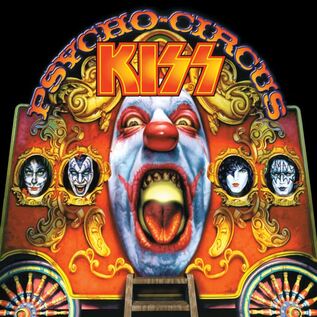
We lost Ace Frehley this year, and that makes this one sting a little. Ace was the wild card, the genuine article in a band that perfected the art of pretending to be genuine. So, in his honor, I decided to revisit the last Kiss album the original four “made” together: Psycho Circus. What I found out by reviewing this album is that by “made,” I mean posed near one another for pictures in makeup while a small army of session players did the actual heavy lifting. But First, before we dig into Psycho Circus, let me tell you a story.
It’s late 1995. After a long day of counting their money Paul and Gene they settle down for a glass of cranberry juice and a movie. Tonight, it was The Blues Brothers. About Halfway through they look at each other and simultaneously exclaim, “Simcha!” Then, again at the exact same time, they say “We’re putting the band back together. We’re on a mission from God.” And just like that, the grand reunion begins.
The makeup went back on, the fire returned, and KISS launched Psycho Circus — the album that promised the magic of four legends together again. Except… Ace plays on one song, Peter drums on that same track, and the rest is classic KISS illusion: louder than life, and as fake as ever. It’s not so much a band anymore as a corporation in greasepaint. They didn’t just sell the show — the show became the product.
So grab your ticket to nostalgia, folks because Ace, Peter, Paul and Mary, oops I mean Gene are on the Last Train to Merchville.
Psycho Circus
The album opens with an actual circus calliope filtered through a PlayStation 2 soundtrack, followed by evil laughter. Then the guitars and everything scream in — and, listen, I have to admit, it’s a strong start. It’s everything you think KISS should sound like: bombastic, cartoonishly self‑important, and just dumb enough to be fun.
The song’s message is pure reunion propaganda. It’s about coming back together, makeup running down their faces, the band restored, the fans dreams made a reality. It should feel triumphant — but there’s something uncanny about it. This isn’t Ace’s Les Paul tone or Peter’s loose swagger. The playing’s too clean, too corporate. The mix is definitely “KISS‑brand EQ” though: treble where guitars live, bass not all that bass-y, just like Gene’s accountant wants it, thin drums that sound like bubble wrap.
Still, credit where it’s due — the title track does what it promises. It’s cinematic. It’s the emotional start of a nostalgia ride. The problem is, you can already tell it was built by robots wearing Kiss masks. It’s the musical equivalent of a wax museum: accurate, shiny, kind of unsettling, and a little sticky if you get too close.
And then just when you think the song is wrapping up, it keeps going — because of course it does. KISS has never met a chorus they didn’t think deserved a seventh run through.
Within
Track two kicks in with spooky guitars and back‑masked ambience, because Gene Simmons heard the word “atmosphere” once and decided to give it a shot. Then the riff lands — big, slow, heavyish, like metal performed by a tank stuck in first gear. Gene starts growling lyrics that sound like they were copied from a spiritual graffiti wall: “Touch without feel, see without sight, write lyrics without meaning, etc.
The song plods around in this half‑tempo sludge, too heavy to groove and too uptight to scare anyone. It’s not terrible — it’s just stuck in a time capsule from 1987. You can almost hear the Aqua Net spraying in the background.
There’s a certain irony here: Gene spends four minutes telling us how deep and tortured he is, while fully outsourcing his soul to session players. The production is pure furniture rock — polished, unmoving, made for soundtracks to movies about extreme rollerblading or a skiing montage. By the end, you realize the darkness he keeps singing about is probably boredom.
If this were a haunted house, it’d be the one at the mall where the ghosts were likely found via a Craigslist post and they really don’t give a shit about scaring anyone.
I Pledge Allegiance to the State of Rock & Roll
This one’s a Paul Stanley number, and it sounds like he wrote it on a treadmill shouting affirmations at himself in a mirror. The riff struts in with confidence, the drums try their best to sound arena‑sized, and Paul delivers every line like he’s been holding in this motivational speech since 1978. It’s not a bad idea — a rock anthem about loyalty to rock itself — but Paul sings like he’s auditioning for a government grant.
There’s something oddly clean about the production; it’s all digital sparkle and corporate determination. Holly Knight and Curtis Cuomo get co‑writing credits, and you can feel it. This doesn’t sound like rebellion; it sounds like teamwork. It’s the sonic equivalent of a time share PowerPoint slideshow.
Lyrically, Paul promises eternal service to “the state of rock and roll,” which would be a rousing sentiment if it didn’t feel like the flag in question would be sold out at the merch table. It’s catchy — I’ll give him that — and it's definitely on brand.
Into the Void
Finally — and I mean finally — we arrive at the single track that actually features the full original line‑up. Ace and Peter are both here, instruments in hand, souls intact. And you can hear it instantly. The groove loosens up, the rhythm breathes, the swagger comes back like a muscle memory that’s been sitting in a bar for twenty years waiting for this moment.
Ace takes the mic, singing with that unmistakable slurry confidence — half cosmic, half Queens. He’s talking about heading “into the void,” and you believe him. His solo isn’t note‑perfect, but it has that human wobble that feels alive, and Peter’s drumming sounds like someone who’s pushing air through actual drums instead of samples. It’s the only song here that comes close to capturing that reckless, joyous 1970s energy.
What’s great is how simple it all is. No hired‑gun precision, no committee polish — just the sound of four guys who used to mean everything to each other trying to remember how that felt. It’s rough, it’s sloppy, it’s rock and roll. And on this album, that makes it a masterpiece.
We Are One
And then all that goodwill evaporates. Gene Simmons returns with “We Are One,” a syrupy lullaby seemingly written for a Hallmark commercial about teamwork. It starts with gentle shakers and acoustic guitars doing their best impersonation of sincerity, then collapses into a choir of cloned Genes chanting about unity. The sentiment would be sweet if it didn’t sound so deeply insincere coming from the world’s most openly capitalistic musician.
Musically, it could pass for a Poison or Cinderella B‑side, he even says something about you don’t know what you got till it's gone — soft, safe, and allergic to personality. Tommy Thayer handles the bulk of the guitar and bass work, and it shows: everything’s tidy to the point of lifelessness. Then come the claps — oh God, the claps — and then the chipmunk harmonies start, my soul is rebelling against right now. This song is getting worse as it goes.
The lyrics reach for profundity but land in the kiddy pool: “We are one — we hold it down — we are one — we are found.” It’s like a kindergarten self‑esteem song. What makes it worse is how earnestly Gene seems to believe it. For a band that built its empire on larger‑than‑life characters, this might be the most human song on the record — and that's definitely not a compliment.
So far, there have been a couple of sparks of life and real energy. This is not it, this might be the worst song I’ve ever sat through for a review. But, I’m still listening as the tacked on ending tries to save the whole molasses ball. But, it doesn’t.
You Wanted the Best
And here’s the big reunion anthem. Four original members, all trading vocals, all pretending this is one big happy family. It opens with thunderous drums, distorted guitar, and the sneaking suspicion that everyone on the track recorded their parts in separate cities. Musically, it’s pretty much “Ballroom Blitz” same energy, half the fun.
Each verse feels like an HR memo about teamwork: Ace gets a line, Peter grumbles one out, Gene roars, Paul belts, and somewhere a producer checks the clock. The lyrics are pure nostalgia fuel — “You wanted the best, you got the best” — but the spark is gone. It’s like watching divorced parents sharing a cigarette outside a custody hearing.. Every “yeah!” sounds like a document being signed.
Musically the stand ins try to sound like Kiss, but you can hear the regret in it. The mix is fuller than most of the album, but also a little too‑compressed — every cymbal hit fries your ears like a pan of bacon. Then, right as it starts to gain steam, it ends with mumbled dialogue and drums, like they were trying to imply something psychedelic or profound but lost interest halfway through. Sorry to break the bad news, but It’s a little late to become the next Pink Floyd, fellas.
Raise Your Glasses
Now we’re in full‑on corporate anthem territory. “Raise Your Glasses” wants to be like the nostalgia you feel when you see a vintage commercial for a toy you had in childhood. Paul wrote this one, and it has his usual optimism‑by‑committee vibe: steady beat, triumphant chorus, and enough clichés to fill a stadium tour brochure.
Musically, it sounds like leftover pieces from the Crazy Nights or Asylum sessions — big arena chords and glossy sheen. Lyrically, it’s every award‑show acceptance speech you’ve ever heard set to power chords. It’s Formulaic like they had a whiteboard with a workflow in the corner with a diagram of how rock songs go.
And, remind me to never let Holly Knight near one of my songs. She’s involved in two songs as a writer on this album and they are both offensive to the ears musically and lyrically. I’m offended they put this song on here. This is a straight up attack on your good musical taste people.
By the bridge, it starts feeling like someone reading the words off a throw pillow. It’s so neat, so rehearsed, that it transcends sincerity entirely.
I Finally Found My Way
Gentle strings, piano, mellow guitar, and tons of reverb lead us into this Kenny Rogers ballad. On no, my mistake, it's the Peter Criss ballad. And it’s basically Beth Part II. Same formula, same sentiment, just … older, and less necessary.
Peter sings earnestly about finding his way home, presumably after decades of singing “I can’t come home right now.” The performance is heartfelt but hits that uncanny valley between dumb idea and karaoke. You want to root for him, but every melodramatic flourish pushes you further away. Then — Oh fuck me — french horns. Because nothing screams “rock & roll” like a brass section that thinks it’s a Disney movie. Bob Ezrin has a writing credit here with Paul and I’m not sure what they are trying to create here. Maybe they just hate Peter this much and revel in him singing this crap?
Sonically, it’s plush and empty, like no one remembered to write dynamics into it the strings and horns score. There’s nothing offensive about it except how predictable it feels. And, you can almost picture Gene in the control booth counting projected royalties for this.
Dreamin
Track nine kicks off with a riff that sounds suspiciously like Alice Cooper’s Eighteen without the sneer. It’s plodding, heavy for no discernible reason, and full of Paul Stanley’s trademark lyrical optimism — like someone trying to sound deep while wearing sunglasses indoors. The guitars chunk away earnestly, but you can sense the committee behind every chord.
Bruce Kulick plays all the guitars and bass here as well as a writing credit, proving once again that Psycho Circus is less a reunion and more a tribute band with the correct wardrobe. But credit where it’s due: Bruce’s playing at least gives this track some life. The tone’s thick, the solo fits, and for a few seconds you forget you’re listening to corporate rock in KISS makeup.
Lyrically, Paul’s doing his usual “follow your dream and believe” thing. It’s the kind of message that would’ve crushed on a fifth‑grade essay in 1988. Still, there are glimpses of something interesting — a Zeppelin‑style sound in places, a little harmonic tension — then Paul jumps back in and smothers it with inspiration. This song could’ve flown if someone just told him to stop narrating it the whole time.
By the end, Dreamin’ feels like one of those fan‑fiction versions of KISS — familiar, enthusiastic, and missing the dangerous fun that made them iconic in the first place.
Journey of 1,000 Years
Here it is, the “epic closer,” which is KISS‑speak for “Pink Floyd cosplay with extra pyrotechnics.” The opening acoustic progression is lovely, whispering promise — wait this is actually straight up Dogs by Pink Floyd's from the Animals album, with the acoustic guitar and all. Except it’s all bark, no soul. Then Gene Simmons stomps in with another batch of fridge‑magnet philosophy: light/dark, love/hate, up/down — basically, the Book of Opposites. You start realizing the “journey” he’s talking about is really one lazy lap around a thesaurus.
The production is huge: stereo guitars swirling, drums crashing like a poorly mic’d apocalypse, and a string section trying its best to elevate material that refuses to be elevated.
Sonically, the cymbals never quit. They bash and shimmer like a toddler discovering kitchenware, obliterating any dynamic range in sight. It’s supposed to sound monumental, but it ends up as a giant noise sandwich filled with expired mayo. When it fades out, it’s less a finale and more an exhausted sigh from the mixing board.
If the album started as a circus, this is the clown smoking crack with the safety coordinator in the bearded ladies trailer while the big top collapses.
Wrap‑Up
So that’s Psycho Circus: the “great KISS reunion” where the makeup reunited, but the musicians mostly didn’t. It’s a concept album about togetherness where a couple of the performers were actually paid not to perform. True story. The irony’s perfect — a record celebrating authenticity that couldn’t be more fabricated if it came from holograms.
But somewhere inside the glitter and ghostwriters rockers one fleeting spark — Into the Void — that raw, imperfect track where Ace and Peter actually show up. That’s the real KISS: messy, off‑kilter, alive.
Ace Frehley was the heart of the noise, the joyful chaos that reminded everyone the circus still needed a soul. Without him, the fire still burns — just colder, cleaner, and a little sadder. For the reunion, I give this a 4. Into the Void is great Kiss. For the album Psycho Circus, its 2 Gene Simmons head cookie jars out of 5.
So raise your glass (careful, it’s licensed merchandise) to the last hurrah of the original lineup. A beautiful illusion, sold flawlessly. Because KISS was never just a band — they were the business of belief, face‑paint edition. The music might fade, but the brand? That’ll live forever on an air freshener and the Vegas show of course.