
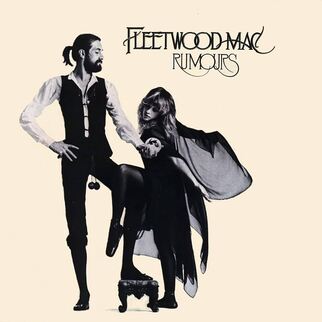
If you were alive in the late ’70s and also owned ears, chances are you had a copy of Rumours. Even if you didn’t buy one, it just appeared in your house one day, in a box that also included a Polaroid camera and some bell-bottoms. It was the law. This is the divorce album, the cocaine album, the “we’re all sleeping with each other and then writing passive-aggressive hit singles about it” album—basically, the soundtrack to a soap opera set in a recording studio.
Every track is either a radio staple, a breakup ballad, or both. It’s a perfect storm of bitterness, heartbreak, and harmonies so good they make you forget everyone hated each other. So let’s dive in track by track, through the heartache, the drama, and the weird tambourine parts.
The record opens with Lindsey Buckingham strumming his guitar like he’s trying to charm a snake, then the band barrels in full force. It’s short, sweet, and instantly grabs you. The vocals are perfectly balanced — Lindsey up front, Stevie swooping in for the bridges, the harmonies clicking like a dysfunctional-but-beautiful family dinner where everyone’s passive-aggressively complimenting the mashed potatoes.
The bassline has that warm, rubbery vibe that wouldn’t feel out of place on Sly Stone’s There’s a Riot Goin’ On. Halfway through, a distorted guitar pokes its head into the mix like a nosy neighbor peering through the blinds, just to check in before scurrying away. And then there’s the chorus: a series of “bam bam bam bam bam bams” that somehow sound like both a threat and a sing-along.
By the end, Buckingham is howling “Second hand news!” as Mick Fleetwood gallops behind him like a medieval knight’s horse on speed. The distorted guitar finally gets to stretch out a bit, though it never fully breaks free — much like Lindsey himself, eternally straining against the band’s chaos. It’s messy, it’s sharp, it’s perfect.
Ah, Dreams. Stevie Nicks’s crystal-vision ballad, the one you’ve heard approximately 78 million times, and yet… it still works. Two chords, bouncing back and forth endlessly like a tennis match at Wimbledon. Stevie delivers her lines with that ghostly, detached cool only she can pull off, while Christine floats harmonies in like wisps of fog drifting through an abandoned ballroom.
The chorus thickens things up — the guys join in, the harmonies expand, and suddenly you’ve got this lush wall of sound that contrasts beautifully with the hushed verses. And those drums? Dry as a bone. Mick Fleetwood somehow makes his kit sound like cardboard boxes filled with sand, but it’s perfect. Distinct, tight, no reverb in sight.
Stevie starts name-dropping crystal visions and dreamscapes, and you can practically hear the teenagers of 1977 clutching their velvet shawls and scribbling moon poetry into notebooks. The background is so drenched in reverb it’s impossible to tell what’s a guitar and what’s a keyboard — everything just floats.
It’s hypnotic, it’s iconic, and it proves that sometimes two chords are all you need, especially if you’ve got Stevie Nicks singing about breaking your heart while staring into a crystal ball.
A palate cleanser — just Lindsey and his acoustic guitar, sounding like three guitars at once because apparently fingerpicking is a superpower when you’re Buckingham. It’s bright, intricate, and deceptively simple, like one of those fancy origami cranes that turns out to be folded from your rent check.
The lyrics are straightforward: “I gave you too many chances, I’m done.” It’s breakup 101, but delivered with such sweetness you almost miss the bite. Lindsey’s voice is clean and steady, and when the harmonies sneak in, it’s pure balm.
What really shines here is the arrangement. It’s so stripped down compared to the lush production elsewhere on the record, which makes it feel intimate — like Lindsey sat down in your living room and started playing while you awkwardly clutched your drink, unsure whether to clap at the end.
It’s short, it’s sweet, and it’s a reminder that sometimes less really is more. And then, just as quickly, it’s gone, leaving you wishing it had stuck around for one more verse.
By now, you’re probably wondering if every track on this album was a hit single. Spoiler: yes. “Don’t Stop” kicks in with Christine pounding out the piano like she’s auditioning for the world’s most optimistic honky-tonk, while Mick slams the kick drum with the subtlety of a man trying to stomp a raccoon out of his attic.
The guitars slide in just enough grit to remind you that underneath all the optimism, this band was fueled by cocaine, divorces, and a level of bitterness usually reserved for bad Yelp reviews. Still, the message is clear: don’t stop thinking about tomorrow because yesterday’s gone. Seriously. Gone. Don’t even look for it. It packed its bags and moved to Cleveland.
Speed this track up 20 BPM and it’s practically a disco anthem. Imagine Donna Summer singing “Don’t Stop,” lights flashing, coke spoons clinking in the background — it would’ve worked. But instead, we get Lindsey and Christine cheerleading you into pretending your problems don’t exist, which is honestly more relatable.
And yes, it’s catchy. Annoyingly so. Like a motivational poster stapled to your brain. “Hang in there!” — but with a Meatwood Flac groove.
This is it: Lindsey Buckingham’s “screw you, Stevie” anthem. He sings with the venom of a man who just watched his ex take the last slice of pizza and then light his car on fire. The whole band joins in to harmonize about how she can “call it another lonely day,” which is basically the cruelest chorus ever disguised as a sing-along.
The guitar solo? Pained, restrained, like it wants to soar but keeps getting dragged back down into the muck. It’s the sound of a man trapped between heartbreak and studio deadlines. You expect it to explode into fireworks, but instead it smolders, mutters “fine, whatever,” and walks off.
And then comes the tambourine. Toward the fadeout, someone — I’m betting Stevie or Mick — smacks a tambourine completely out of time, as if they’ve just realized halfway through the song that they’re in Fleetwood Mac and panicked. It’s glorious. I always wait for it.
Rumor has it (pun intended) there was literally a note on the fridge that said: “Save some Coke for the band.” Which explains both the tambourine AND the fact that Lindsey was writing breakup songs about Stevie while she was standing ten feet away, harmonizing with him. This album is basically a group therapy session with a platinum plaque.
Christine McVie steps into the spotlight, alone at a piano, in an empty theater. No band, no harmonies, no tambourine sabotage. Just her voice and the ivories, echoing into the void like the world’s most elegant soundcheck.
The song itself is a love ballad — not for her husband, mind you, but for her new love. Fleetwood Mac: keeping HR departments busy since 1970. The sentiment is syrupy, almost Hallmark-level, but Christine’s conviction sells it. She could sing the McDonald’s menu and make you cry.
Still, let’s be honest: it’s a skip track. Beautiful, haunting, delicate… but when you’re knee-deep in cocaine-fueled breakup anthems, a solo piano ballad feels like someone pausing your favorite action movie to show you a slideshow of kittens. Lovely, but out of place.
And yet, every time I skip it, I feel guilty. Like Christine herself is staring at me from across the room, whispering, “Really? You’re skipping me? After everything?” And then I close Spotify and question my entire life. Thanks, Christine.
This one creeps in on a thumping kick drum and a little banjo plucking like someone invited Deliverance to the breakup party. It’s brooding, minimal, and tense — until the chorus hits and suddenly Lindsey snarls, “If you don’t love me now, you will never love me again,” which is the musical equivalent of slamming the fridge door when your roommate steals your leftovers.
Each chorus builds heavier, louder, and more furious. The harmonies sharpen, the guitars slice in, and by the time that iconic bassline breakdown shows up, you know something epic’s about to go down. John McVie slides into that riff so smoothly it’s like butter melting on hot popcorn, and then Mick’s snare starts cracking like someone’s firing warning shots.
And then? The whole band detonates into the final section: screaming guitars, thundering drums, Stevie and Lindsey hurling “chain keeps us together!” back and forth like they’re in the world’s most toxic couples therapy session.
I swear, every time I hear this song, I imagine a giant stone arena, thunderclouds overhead, Lindsey and Stevie battling with flaming swords while Mick plays a drum kit made of bones. That’s the energy here. The chain keeps them together, but only because it’s welded shut with cocaine and spite.
Christine’s back, and suddenly the band sounds like they’ve just discovered happiness again. Funky clavinet keyboards, smooth basslines, subdued drums — it’s like they wandered into a disco club by mistake and decided to stay for a round.
Her voice is clean and confident, fitting snug into the pocket like it was tailor-made for this groove. The verses bop along with mellow funkiness, and then the chorus floats off into dreamy, syrupy harmonies. It’s like two completely different songs stitched together, but somehow it works — like a peanut butter and pickle sandwich.
The lyrics talk about magic, miracles, love… which is ironic, given the band’s personal lives at the time were less “miracle” and more “extended police report.” But Christine sounds so sincere that you believe her anyway.
In headphones, this one’s a treat: tiny vocal details, subtle instrumental layers, little bursts of joy hidden in the mix. Even if relationships were crumbling around them, for three minutes and thirty-six seconds, it sounds like Christine was having fun. And I kind of believe she was.
By this point, it’s basically a greatest hits album disguised as a normal record. “I Don’t Want to Know” starts off bouncy and sing-songy, like the Mac decided to write a breakup song you could play at a picnic. Lindsey and Stevie’s harmonies blend so well it’s almost unfair — how do two people who hate each other sound this good together?
The guitars are light and jangly, the bass walks happily along, and the whole thing just… clicks. It’s short, it’s sweet, and it’s so effortlessly catchy you could hum it after one listen. It’s like they distilled Fleetwood Mac into pure concentrate and poured it straight into your ears.
Yes, it’s another song about a troubled relationship. Yes, we’ve already had ten of those. But it doesn’t matter. Because each one lands differently, and this one just feels like sunshine on your face — if sunshine came with an undertone of “I hate you, but damn, we sound good together.”
Sometimes I think Fleetwood Mac could’ve released an entire double album called Songs About Our Awful Relationships, and every track would’ve been a hit. Oh, wait, they basically did.
This one sneaks in like a fog machine at a middle school dance: moody guitars, a faint Casio-like keyboard lurking in the background, and Christine delivering her vocals with hushed intensity, like she’s reading a love letter at midnight by candlelight. The whole vibe is eerie, quiet, almost funereal — except instead of a coffin, it’s the burial of whatever scraps of sanity the band had left in ’77.
The lyrics sound like an apology, like Christine’s saying “sorry for being a mess” while Mick Fleetwood bangs a slow heartbeat behind her. Each little instrumental change — the soft guitar licks, the subtle breaks — adds a layer of unease. It’s formulaic at first, but then the arrangement pulls tricks, like it knows it’s been underestimated.
By the end, you’re left with a song that feels bigger than it should, the kind of track that starts as a whisper and leaves you with chills. It’s not flashy, it’s not a hit, but it’s one of those “hidden gems” that make the whole record feel deeper. Also, the title makes me uncomfortable. Moving on.
Here’s the thesis statement. Cocaine? Check. Shattered illusions of love? Check. Stevie Nicks channeling a mythical banshee energy? DOUBLE check. From the opening strums, the song builds slowly, ominously, like the soundtrack to a witchy ritual in the desert.
Stevie’s delivery is mesmerizing: raspy, hypnotic, full of questions that aren’t really questions. “Is it over now? Do you know how to pick up the pieces and go home?” Yeah, Stevie, I don’t know how to pick up the pieces either. Thanks for bringing it up.
As the song grows, it becomes this swirling storm — guitars weaving, percussion rattling, Stevie wailing like she just shapeshifted into a dragon. By the end, she is the Gold Dust Woman: shattered, haunting, larger than life. It’s less a song than a spell, the kind you don’t fully understand but still leaves you a little scorched.
This is the closer Rumours deserved: raw, mystical, and definitive. The exclamation point on a record built out of tears, dust, and enough blow to keep an elephant awake for three weeks.
Growing up, Rumours was everywhere. My parents had it. My friends’ parents had it. My dentist probably had it. I’m convinced they gave out a free copy with every purchase of Tide in 1978. It’s one of those albums that transcended ownership — it just appeared, like a cursed object, in every home across America.
Listening back now, it’s easy to see why. The production is airtight, the performances are electric, and the lyrics cut sharper than any soap opera monologue. Every song is a balancing act between dysfunction and harmony, rage and beauty, coke-fueled madness and crystalline perfection.
So yeah, it’s one of the best-selling albums of all time for a reason. It’s messy, it’s brilliant, it’s absurd — it’s Fleetwood Mac at their peak. And we’re all just lucky they managed to hate each other enough to make it sound this good.
And that’s Rumours. The ultimate breakup album where everyone slept with everyone, did all the coke, and somehow still managed to crank out eleven perfect tracks. It’s bitter, it’s beautiful, it’s unhinged — kind of like an HOA meeting if all the neighbors were platinum-selling rockstars.