
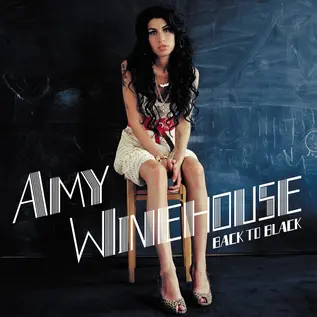
Back to Black is a late-night confessional at the bar. It’s Motown horns poured over ice, reggae rhythms slipping in through the back door, and a voice so raw it makes you feel a little weird for listening at all. This isn’t just an album—it’s Amy Winehouse handing you her diary, slapping a cigarette in your mouth, and demanding you keep up.
From the opening “no, no, no” of Rehab to the bittersweet strut of He Can Hold Her, every track drips with humor, heartbreak, and just the right amount of self-destruction. It’s not clean, it’s not polite, and it sure as hell isn’t easy listening. But that’s what makes it brilliant.
Rehab
The album kicks off with “Rehab,” which has about as much subtlety as a car crash in an Amish village. That left-channel keyboard lurches in like it’s trying to start a conversation, an intervention, and then the drums—dry, snappy, vintage as hell—come stomping in. Add in the bells, the horns, and suddenly you’re in a one-woman Supremes revival where the Supreme in question just got back from a three-day bender and still outsings everyone in the room. Amy belts “no, no, no” with such conviction, you start to wonder if maybe you should be the one checking into rehab.
But then you get caught up in the thought spiral: what if she had gone? Would we still have her? Would she have been stuck making an adult contemporary duets album with Michael Bublé about how much fun it is to floss regularly? There’s this cruel irony with artists like Amy—the very demons that shorten their lives also make their art unfiltered, dangerous, alive. Imagine a clean, sober Amy Winehouse politely singing about quinoa recipes. I don’t want that. You don’t want that. Nobody wants that except maybe Whole Foods.
It’s a weird bargain we make as listeners—cheering on this raw, soul-baring music while secretly hoping the person making it can survive their own genius. A lot of times, they don’t. Still, this song slaps, which is more than I can say for Bublé.
You Know I’m No Good
The bass slinks in first, greasy and restless, before the drums tumble along in this stutter-step hip-hop shuffle that feels like someone programmed a beat machine to flirt with you. Then come the horns—stacked on horns—layers of brass so thick it sounds like Amy’s producers were trying to resurrect Phil Spector, minus the murder vibes.
Amy floats above it all, conversational and raw, like she’s telling you secrets she swore she wouldn’t. There’s a sloppiness in her phrasing, but it’s the good kind of sloppy—the kind that makes it sound like there was literally no other way this song could ever be sung. She’s not interpreting lyrics; she’s gossiping with melody. “You Know I’m No Good” feels less like a pop song and more like someone’s brutally honest drunk text turned into a Motown jam.
The best part is that the whole thing sounds inevitable. Every horn stab, every word in her delivery—like the universe aligned in that moment and said, “Yeah, this is exactly how it has to sound.” Honestly, most singers spend years learning phrasing tricks. Amy just rolled out of bed, lit a cigarette, and nailed it.
Me & Mr. Jones
“What kind of fuckery is this?” is both the opening lyric and also the only correct response to someone making you miss a Slick Rick show. Imagine being the person responsible for that. You didn’t just disappoint Amy Winehouse; you triggered a cultural artifact. You made her miss fucking Children’s Story, live! Someone out there today is whispering to themselves, “I could have prevented this song.”
The groove here is mellow, swinging gently like a jazz club. It’s packed with little flourishes—tiny blasts of brass, background vocals from what sounds like a small but deeply judgmental girl group, the whole thing dripping in that retro Motown glow. By track three, it’s obvious the album has a “house style”—a sound palette they’re going to ride into the ground in the best possible way.
And the delivery? Amy leans into it like she’s both furious and half-asleep, letting her voice rasp and slide in all the wrong ways that somehow end up right. “Mr. Jones” is less about romance and more about being robbed of an experience, which—let’s be real—is romance when you’re a music nerd. Somebody ruins your concert plans, that’s basically grounds for divorce.
Just Friends
“Just Friends” drifts in like the soundtrack to a 1972 beach party where everyone’s too heartbroken to actually have fun. A few wispy guitar lines, some breezy horns, and Amy sighing about finding the time to be, well, just friends. Which, let’s be honest, is the most passive-aggressive line in the English language. Nobody has ever wanted to “just be friends” unless they were plotting their escape from a romantic crime scene.
Musically, it leans reggae-lite, a little sunshine, a little smoke cloud, like a warm-up act for Bob Marley if Bob had shown up late and the band decided to vamp. There’s a laziness in the groove that works, though—it’s not trying too hard, just rolling along, sipping its drink. Halfway through, the horns come back in with a melody so simple it’s basically a musical shrug, and that’s kind of the whole vibe.
Back to Black
Here it is: the title track, the heavy hitter, the anthem of mascara tears and bad decisions. From the first notes, you can tell exactly what Amy and her producers were chasing—classic Supremes drama, all minor-key sadness dressed up in lush strings and slow-burning grooves. It’s retro, but not kitsch. This is heartbreak with a bouffant.
Her voice here is devastating—raspy, intimate, and somehow towering at the same time. When she croons, “we only said goodbye with words,” it’s the kind of line that makes you want to pause your drink midair and reconsider every relationship you’ve ever ended. The string breakdown in the middle is pure theater—weepy violins swooping in just long enough to tear your shirt open passionately before the chorus slams back in like the cops knocking on your door at midnight.
And here’s the part my brain can’t let go of: every single time I hear this track, I start humming AC/DC’s “Back in Black” over the top of it. The riffs sync almost perfectly. Imagine Amy crooning about heartbreak while Angus Young shreds in the corner like a wallaby. It shouldn’t work. It does. Somebody make the mashup.
Love Is a Losing Game
From the title, you’d probably assume this is another Motown-slash-Supremes torch song. And guess what? You bet your sweet ass it is. Wait, what? Who invented that phrase? “You bet your sweet ass.” Sweet? Ass? What are we doing here, people? Somehow, someone, somewhere said this nonsense, and it stuck in the lexicon like gum on the bottom of humanity’s shoe.
And don’t even get me started on “Sure as shit.” Sure as shit? What does that mean? How did we, as a society, look at literal feces and think, “Yes, that’s the benchmark of certainty.” Somewhere in our past, a caveman stubbed his toe, shouted it, and now I’m here in the year two-thousand-and-whatever trying to listen to Amy Winehouse spouting idioms of the ancients. There’s no two ways about it, you're damn straight if you think I’m going to cut the crap. Arhggg!
The point is: the song’s gorgeous, heartbreaking, and stripped down to its bare emotional bones, but my brain can’t let go of the idiom apocalypse that comes with it. Amy’s crooning about the futility of love, and meanwhile I’m in the corner shouting at phrases like a drunk uncle at the family reunion.. But maybe that’s the genius of it — her voice is so commanding she makes you question not only your relationships but also whether “you bet your sweet ass” deserves to exist.
Amy delivers the whole thing like she’s already resigned to the loss—no begging, no bargaining, just a smoky sigh into the void. The simplicity of it is brutal. No overproduction, no flashy horns, just a steady pulse and her voice front and center. It’s the kind of song that sneaks into your chest cavity and sets up shop without asking.
But because this is me, I have to get hung up on something stupid: phrases like “you bet your sweet ass” or “sure as shit” keep rattling around in my head while I listen. Who invented those? Who looked at someone’s ass and said, “Yes, that’s sweet. Let’s use that in a gambling metaphor.” It’s nonsense. Which is to say, “Love Is a Losing Game” is gorgeous, heartbreaking, and makes me want to ban certain idioms from the English language forever.
Tears Dry on Their Own
The song kicks off with those crisp clicks and sticks, and before you know it, the horns are stabbing through like they’re auditioning for a Supremes revival night. Honestly, half this album sounds like Amy time-traveled to 1965, mugged the Motown house band, and brought them back to London. And it works. The groove here feels effortless, like she’s barely breaking a sweat while the band is busting their collective ass to sound like they’re not trying.
What blows me away is how authentic it feels. This isn’t a cheap homage or some vinyl thrift-store cosplay. Amy and the producers did their homework. They studied the exact angles Motown horns attack from, the way the bass sneaks between kick drum thumps, the casual perfection of background vocals that sound like three backup singers who’ve been sipping brandy since noon. It’s all so convincing, you start to wonder if Berry Gordy himself was ghost-producing from beyond the grave.
And then Amy’s delivery cuts through, matter-of-fact and conversational, like she’s telling you a story over a cigarette outside a bar. The magic is in how unpolished it feels—her voice cracks, slides, drifts—but it’s always right. It’s like she tricked us all into thinking heartbreak was glamorous, when in reality it’s just crying in yesterday’s eyeliner and eating crisps over the sink.
Wake Up Alone
Now this one sways in like the last slow dance at a 1967 prom, except instead of awkward teenagers shuffling around a gymnasium, it’s adults wrestling with crippling loneliness and a hangover. The guitar plinks, the piano tinkles, and then Amy glides in, sounding like she’s already lived three lifetimes of disappointment before breakfast.
The arrangement is subtle, almost sneaky. You’ve got the little modulations where the background vocals float in, giving it this classy, almost “grown-up heartbreak” vibe. It’s restrained, but intentionally so. This record was never meant to be about dazzling musical virtuosity. It’s about mood, atmosphere, and letting Amy’s phrasing do all the heavy lifting. You don’t need a ten-minute guitar solo when you have Amy.
By the end, you feel like you’ve been sitting in a dimly lit bar watching her on a tiny stage, drink sweating in your hand, wondering whether clapping would ruin the moment. It’s intimate, it’s haunting.
Unholy War
This track creeps in with harmonies that feel less like backing vocals and more like apparitions hovering just over Amy’s shoulder. It’s moody, and it should hit harder than it does. The bones are there—solid melody, aching delivery—but Amy’s buried in the mix, like she’s shouting from the bottom of a pool.
And let’s be real: where are my horns? By this point in the album, the brass section has been my emotional support animal. They’ve been there through every breakup, every bad decision, every Supremes throwback. But now they’re gone, and the track feels naked without them. It’s like Motown called in sick and left a reggae band on DMT to cover the shift.
The result is a song that sort of drifts instead of punches. With a little more grit, a little more brass, it could’ve been another standout. Instead, it’s like your weird cousin—still part of the family, still worth your time, but you’re not exactly wanting to chat with them if it's not a holiday.
He Can Hold Her
This one strolls in like a carefree summer afternoon, the kind of groove that makes you think everything’s fine… until you remember it’s Amy, so of course it isn’t. The beat is sunny, the horns are distant but cheerful, and the guitars shuffle around like they’re wearing flip-flops. The background vocals slip in with that Motown glow again, convincing you for just a second that this is a happy ending.
But listen closer: those drums sound almost mechanical, programmed even, thumping high in the mix. They’re lazy but deliberate, like they’ve been spiking their lemonade all day and can’t quite keep it together. And those fills? They’re not flashy. They’re just… right. They exist purely to keep the whole thing bouncing, like a hammock swaying between two palm trees while Amy sings about heartbreak with a smile.
It’s a strange contradiction: the music is breezy, but the lyrics cut. That’s Amy, though—wrapping pain in sweetness, handing it to you like candy laced with arsenic. By the time it fades out, you don’t know whether you should dance, cry, or order another drink. Probably all three.
And that’s Back to Black. An album that takes Motown, reggae, and soul, dunks them in whiskey, drags them through a London alley at 3 AM, and hands them back to you still smoldering. Every track is soaked in contradiction—beautiful but raw, catchy but devastating, fun but absolutely soul-crushing if you actually listen.
Amy Winehouse didn’t just sing her pain; she weaponized it. She turned bad nights, bad relationships, and bad decisions into something transcendent. And the thing is, you can hear it—every crack in her voice, every horn stab, every drum beat mixed just a little too dry. It’s all part of the world she built, one that feels simultaneously retro and completely timeless.
If you’ve ever wondered why this album still hits like a sucker punch, it’s because it doesn’t let you escape. Even the “fun” tracks are laced with melancholy, and the sad ones make you want to dance in spite of yourself. It’s genius in a trench coat, dragging you down the street, demanding you come along whether you’re ready or not.
So yeah, Back to Black isn’t just a record. It’s a confessional booth and a dive bar jukebox all rolled into one. Amy didn’t just go out on her own terms—she left behind a masterpiece that’s as brilliant and unforgettable as she was.